
10 Groundbreaking Speaker Designs
1. Single-speaker dual-crossover circuit design
2. Single-speaker dual-chamber design
3. Single-speaker design supporting stereo input
4. Mid-to-high frequency sound feedback port design
5. Focused or diffuse sound field adjustment design
6. Impedance matching design for external speaker wiring
7. High-frequency path with external resistor attenuation design
8. Single-cabinet design featuring four mid-bass drivers in a push-pull configuration
9. Dual amplifier simultaneous input design
10. Design enabling separate processing of vocals and music
Patented:
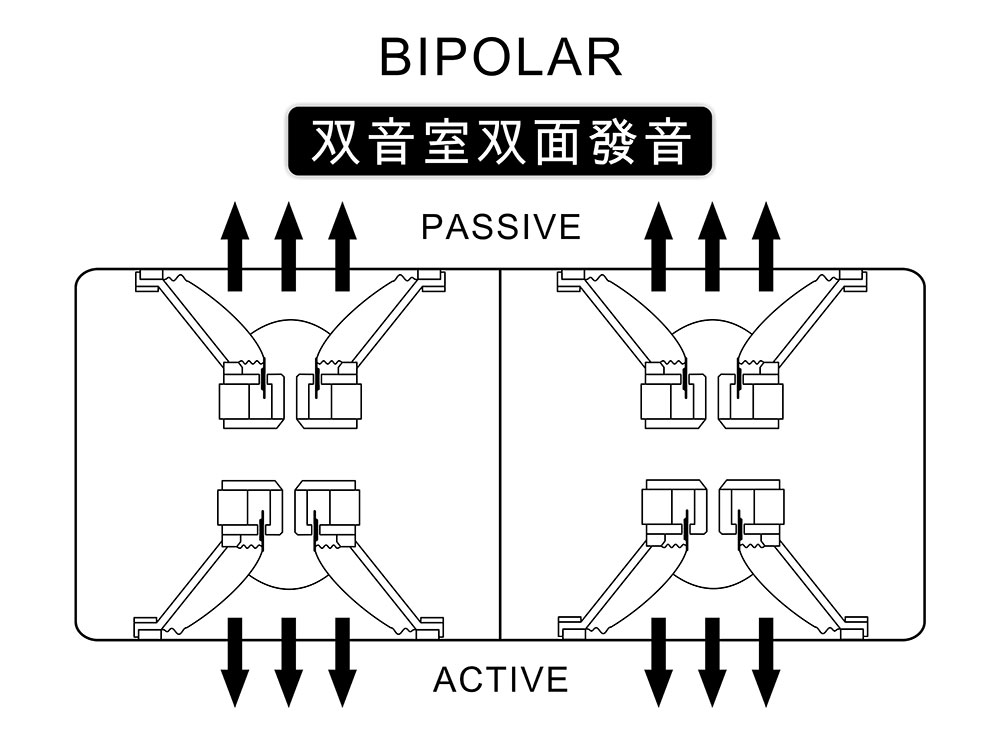
BiPolar Dual-Facing Speaker
KB-2348P adopts 8inch smaller woofers with4pieces can be used to create the same effects as those of a larger woofer without sacrificing the bass frequency response. Many European speakers take this design path and it is rare to see a woofer that exceeds eight inches in a European front speaker.
There are some high end speakers where a tweeter or a super tweeter is mounted on the back of the speaker in an effort to broaden the sound field.
Karabar speakers are the first karaoke speakers to use the bipolar design.
Karabar speakers have midrange and woofer drivers facing the back of the speaker, which uses the wall to bounce low and middle frequency sound waves and creates a sound field that is both very broad and encompassing.
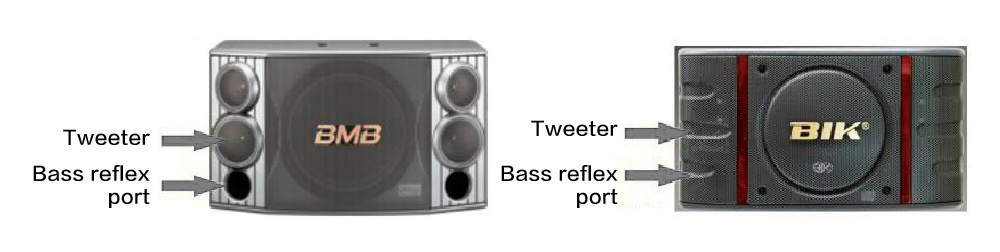
Special air pressure ports:
Typically bass reflex subwoofers are designed with down firing drivers to maximize the bass effects using the reflex port mounted on the speaker cabinet. Air flow across the reflex port creates a resonance lower than the resonance frequency of the woofer and these two frequencies work in tandem to create an even lower frequency.
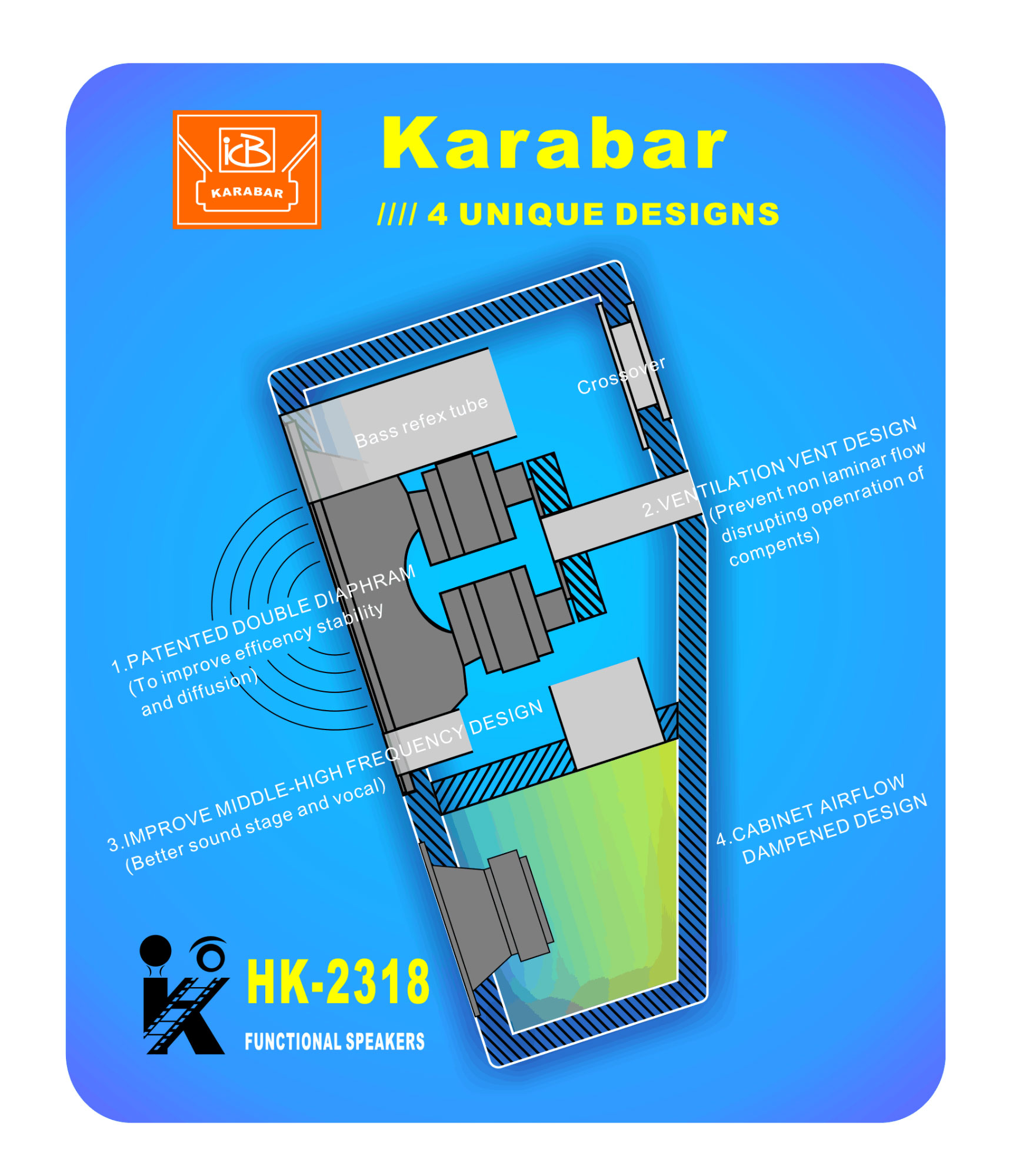
Single speaker dual cabinet design:
From the outside one cannot see the interior design of the speaker cabinet. Using TCTR designs we have created one speaker with two discrete interior cabinets. By incorporating two discrete cabinets into the speaker design we have improved the structural integrity of the speaker and quashed any reverberation issues caused by low frequency sound waves.
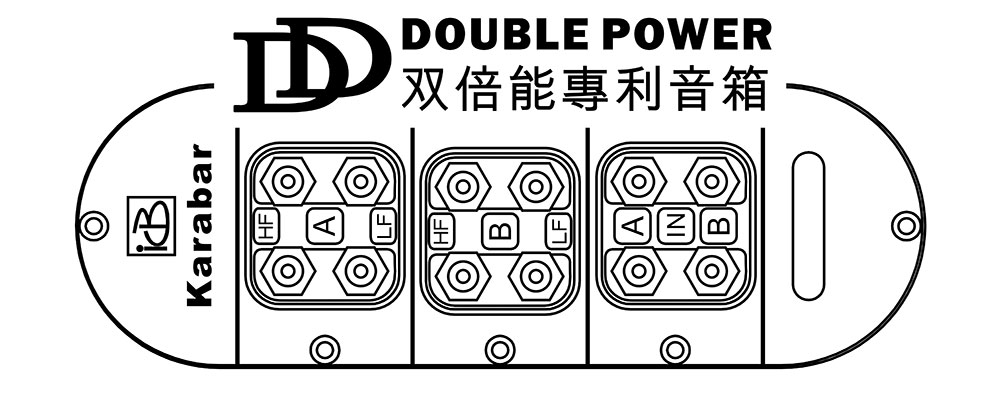
When the jumper is removed from the IN terminal on the twin crossover both cabinet A an B are transformed into discrete speakers and when a LR signal is outputted from an amplifier, stereophonic sound is produced from this single speaker. Please refer to Figure 6 The twin crossover is situated inside a separate enclosed compartment to prevent vibrations from the woofer from disrupting the stability of the sound field.
Improved jumper terminals:
When all jumpers are removed from the terminals discrete circuits are formed of the separate drivers and different input sources can be connected to individual drivers. This separation of drivers allows for series or parallel wiring. Please consult the user manual before connecting terminals. This separation of drivers allows for series or parallel wiring. Depending on different acoustic environments different wiring options can be attempted for a more optimal sound field.
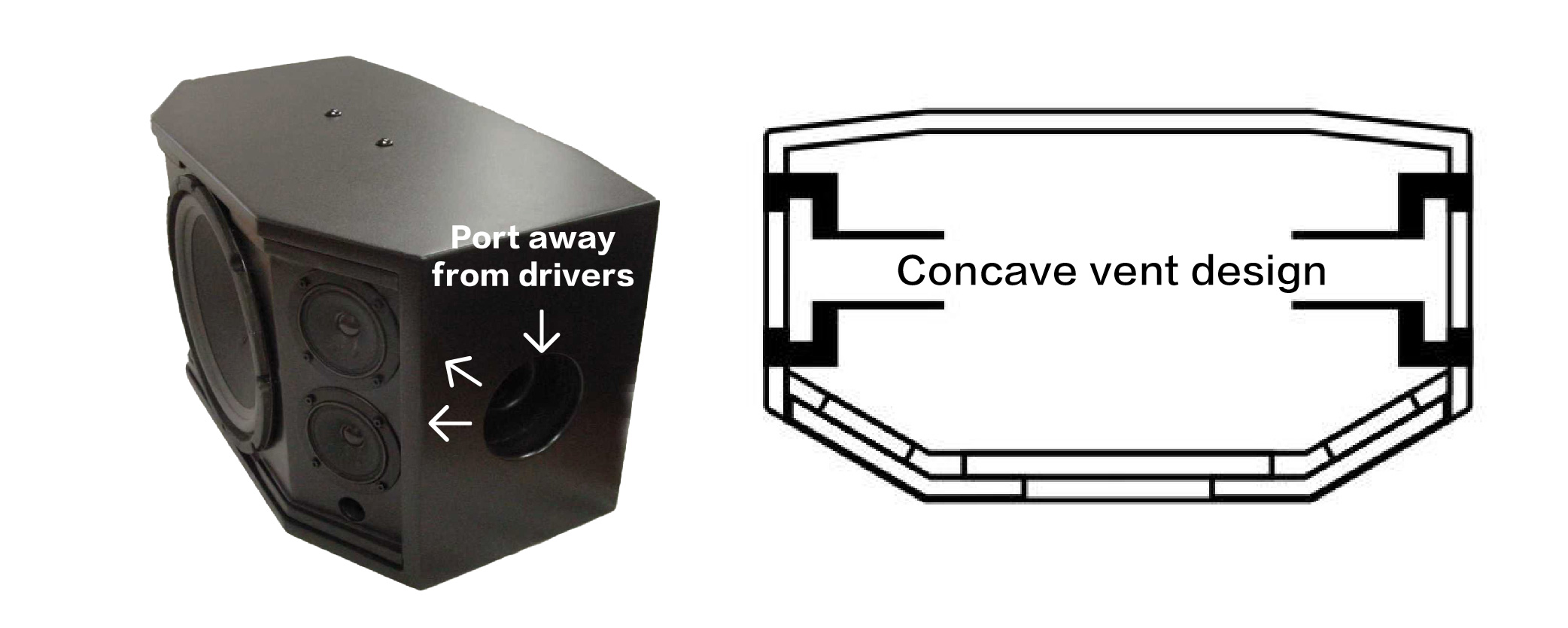
KB-4310M Concave Vent Design delivers clearer sound quality and enhanced balance.
Bass reflex speaker design will often encounter problems, such as port generated the wind cutting sound by the powerful low-frequency airflow, improper arrangement of drivers and ports generated by low-frequency interference problems, which will seriously affect the clarity of the sound.
Due to the above problem KARABAR KB-4310M bass reflex port design is arranged on both sides of the speaker away from the front drivers to avoid the low frequency sound waves emitted from the bass reflex port and the sound waves from the front drivers to interfere with each other and further enhance the clarity of the sound. (Not designed in the back is because some cases of speakers must be wall-mounted)